


Helping Cities Get Mobility Right

Updated: Jun 21
OMF's Aylene McCallum urges cities to use new digital data standards to connect with shared-mobility providers and improve the safety and equity of public rights-of-way.

Key Takeaways:
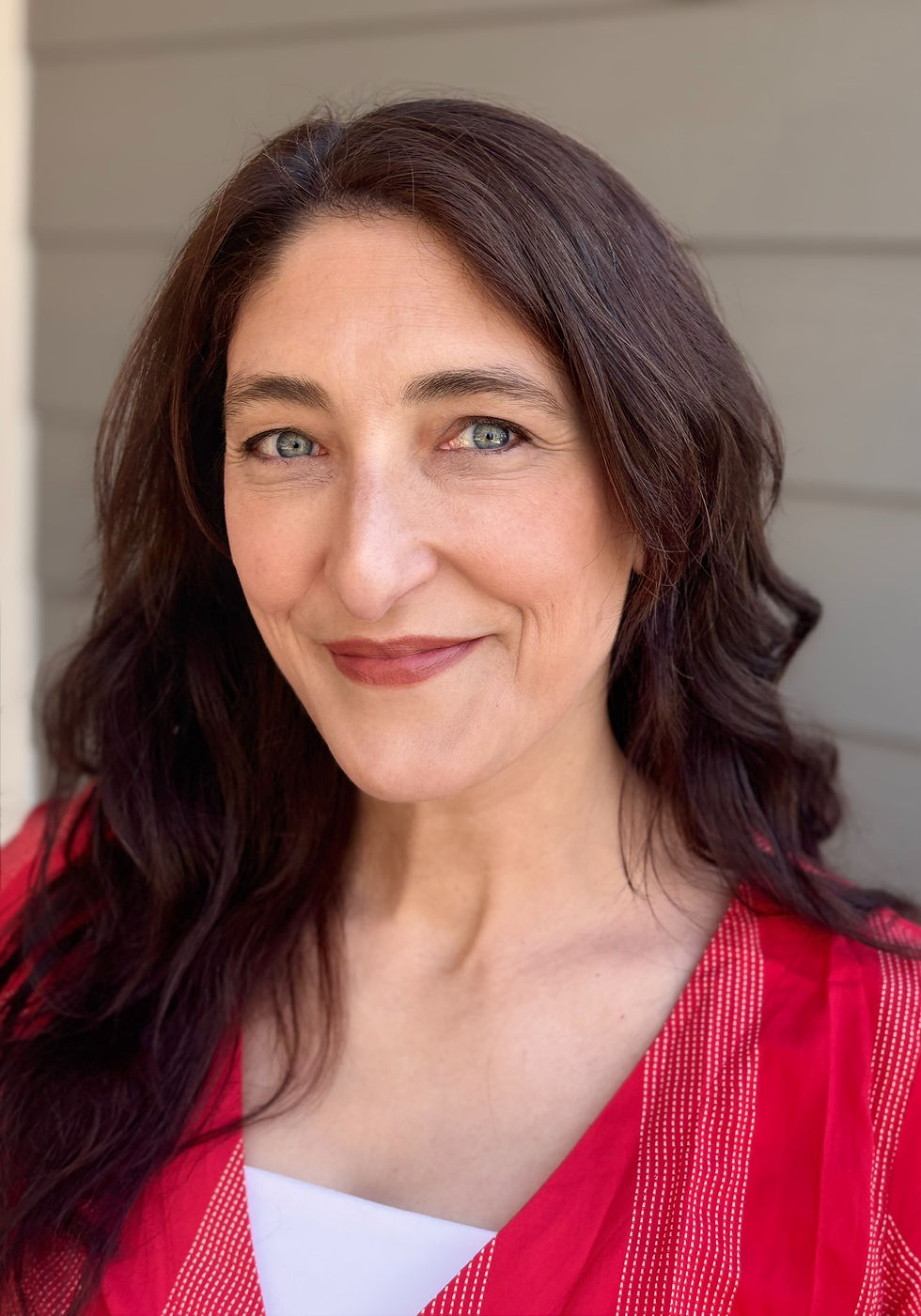
Aylene McCallum, director of partnerships and development for the Open Mobility Foundation, is helping cities worldwide adopt open-source digital mobility standards that improve the safety, efficiency, and equity of public rights-of-way. Using OMF's Mobility Data Specification (MDS) and Curb Data Specification (CDS), she's helping cities and transportation providers share operational data and better manage emerging mobility services.
McCallum's career reflects a long-standing commitment to transportation innovation, leadership, and urban planning. After advancing transportation initiatives at the Downtown Denver Partnership, for 17 years, she joined the OMF in 2023 to expand the global impact of digital infrastructure tools such as MDS and CDS.
Today she's helping OMF build a shared global community around digital transportation standards. She advocates for broader understanding and adoption of OMF’s open-source mobility tools, emphasizing collaboration among cities, transportation companies, and public agencies to create scalable, data-driven solutions for managing urban mobility and curb space.
At age five, Aylene McCallum, a Milwaukie, Ore. native, visited her grandparents’ home near Ft. Lauderdale, Fla. for the first time. One day, her dad and grandpa invited her to tag along on a trip to the local grocery store, about a 15-minute drive. As they got back into their car for the return trip, Aylene’s dad joked, “Hey, let’s see if Aylene can get us back.”
At first, her grandfather laughed. But then McCallum began giving directions: turn left, go straight, turn right at the next light—all the way home without missing a turn.
“My dad and grandpa were both thinking, ‘OMG, who is this girl?’” she recalls. “I’ve always had an amazing sense of direction. I think it’s because I notice transportation details that others often ignore.
Pitching New Standards
Today, as the director of partnerships and development for the Open Mobility Foundation (OMF), McCallum is helping cities and transportation companies worldwide navigate a new world of digital infrastructure. That world is anchored by two open-source data standards: the Mobility Data Specification (MDS) and the Curb Data Specification (CDS).
MDS is an API-based data standard that defines how cities and sharedmobility service providers (e-scooters, bike share, etc.) format and share operational data. It allows cities to monitor and regulate mobility services in public rights-of-way.
And it gives mobility companies a consistent and efficient way to communicate with cities about the rules governing those rights-of-way, whether they are in Los Angeles, Stockholm, or Bogotá.

By contrast, CDS focuses on the curb. It replaces static, often-confusing parking signs with a digital map of a city’s curb. CDS shows ride-hail drivers, freight delivery operators etc. where they can stop or park, for how long, and under what conditions.
“Cities are tasked with managing public rights-of-way, which are city-owned property,” McCallum explains. “MDS and CDS allow cities to optimize those public spaces while ensuring that transportation services are being delivered safely and equitably.”
Privacy, she adds, is also built into the standards. Data collected through MDS and CDS focuses on vehicles rather than individual riders. Tracking typically occurs only during discrete events such as leaving or arriving at a destination, instead of continuous monitoring.

Connecting Curiosity to Leadership
McCallum grew up in the 1980s, the oldest of three girls raised by a medical sciences liaison (her dad), and a CPA (her mom). As a young girl, she was fascinated with how local streets worked.
“‘Why did that light just turn red? Why does traffic always back up here at this time of day? What is this new transportation project going to be? Is it going to be a bike lane?” she wondered.
As she got older, McCallum began to realize that her keen navigational skills—her dad likened her to a homing pigeon—also positioned her for leadership roles; i.e., the ability to guide people “turn-by-turn” toward a shared goal.
She first noticed this connection while helping produce her high school’s theater program.
“I spent time talking to actors and stage managers, working with the publicity team, and coordinating everything needed to put on the show,” she recalls. “I was always drawn to ushering people along a journey to help them achieve their vision.”
Discovering Transportation Policy
For college, McCallum’s leadership instincts guided her to the University of Denver (DU), where her life began to intersect more explicitly with transportation policy. A class in federal budget policy during her senior year made all the difference.

McCallum's class was tasked with building and balancing a federal budget. Serendipitously, she was assigned the transportation, environment and community-building portions of the budget.

After researching the budget impacts of changes to these federal policy areas, she proposed a five-cent-per-gallon increase in the federal gas tax, a tax that has remained unchanged at 18.4 cents per gallon since 1993.
“I wanted to bring in extra money to the federal government to develop transportation infrastructure that would rely less on single-occupancy vehicles,” McCallum explains.
The exercise—McCallum’s professor hated her idea but gave her an A in the class—also cemented her interest in transportation. She graduated DU in June 2000 with a double major Bachelor of Arts degree in communications and public policy.
Trying On Different Lifestyles
For the next few years, McCallum tried working in the Portland, Ore. office of U.S. Senator Ron Wyden (D-Ore.), then later for an immigration law firm in Boston. Eventually, she ended up back in Denver. Initially, she worked for a small transportation association, then landed, in 2006 at the Downtown Denver Partnership (DDP).

Focusing on Doing
DDP is a nonprofit, private-sector-led group focused on strengthening the economic vitality of the Denver’s urban core. McCallum spent the next 17 years with DDP inspiring and guiding significant changes to the city's transportation infrastructure.
Her signature achievement for DDP was creating and leading its Urban Exploration Program. This annual, three-day program sends cohorts of Denver’s business leaders and elected officials to “peer” cities to learn how those cities are addressing the same urban planning issues facing Denver.
“We always started with our own vision,” McCallum emphasizes. “My goal was always to shift the conversation from if we should do something (such as installing bike lanes) to how we should do something.”
Scaling Up
By spring 2023, however, McCallum was itching to “scale” her impact in the transportation industry. She wanted to do more than just serve Denver’s urban planning needs.

“OMF was that opportunity,” she declares. “I wanted to challenge myself to learn how MDS and CDS were creating a transportation ecosystem that could benefit cities worldwide.”
She joined OMF in October 2023 and has been there ever since.
How MDS Was Born
MDS was originally developed in 2018 by the Los Angeles Department of Transportation (LADOT). Dockless, shared-mobility devices such as e-scooters and bikes had arrived unannounced on LA-area streets. And the agency had no standardized way for service providers to report critical information such as trip starts/ends, vehicle locations and usage patterns to them.

LADOT created the first version of MDS. Eventually, however, several other cities recognized that the standard needed more ongoing governance than a single city could provide. In 2019, a consortium that included Los Angeles, Philadelphia and Austin, Tex. launched OMF as a nonprofit dedicated to developing open-source digital tools for managing urban infrastructure.
Governing the Digital Downtown
Today, OMF provides a forum for public agencies, private mobility operators, technical experts and transportation advocates to collaborate and shape the evolution of MDS and CDS. Its challenge is to maintain standards that can be used easily worldwide.
“At the Downtown Denver Partnership,” McCallum reflects, “we stewarded a public space that you could walk through, touch and breathe. With OMF, we’re stewarding a digital space that also requires feedback from the public and the private sector.”
Reducing Friction for Cities
McCallum often compares OMF’s data standards to standardized dimensions used in appliance manufacturing.

“Dishwashers, refrigerators and washing machines are built to common sizes so they fit in standard cabinets,” she advises.
“Kitchen designers don’t have to design a new kitchen around every new product. And consumers don’t have to remodel their kitchen or laundry room whenever they replace an appliance.”
Digital data standards, McCallum continues, work the same way.
“With MDS and CDS, cities and transportation companies can use the same data format and the same type of connection to share operational data about all types of mobility devices,” she says. “It effectively reduces ‘friction’ between cities and mobility operators.”
Growing the Digital Community
Today, OMF's membership' list includes 67 government agencies (mostly cities) and 21 companies. In McCallum's perfect world, however, that list is growing.

“Remember, MDS and CDS are free, open-source data standards,” McCallum notes. “You don’t have to be an OMF member to use them. But membership gives you a seat at the table to help shape them.”
Making Membership Count
To incentivize cities and mobility operators to join OMF, the organization recently launched the OMF Academy, a suite of classes and programs designed to train members to understand and deploy digital mobility tools.
“So far, the program has been extremely well received,” McCallum claims. “We promoted it to our best OMF stakeholders, hoping that they would invite their peers who didn’t understand digital infrastructure, MDS and CDS ...and that’s exactly what’s happening.”
Cities that choose not to adopt digital data standards, she warns, can expect to be “inundated” by growing amounts of (disparate) data from transportation companies.
Prioritizing Family
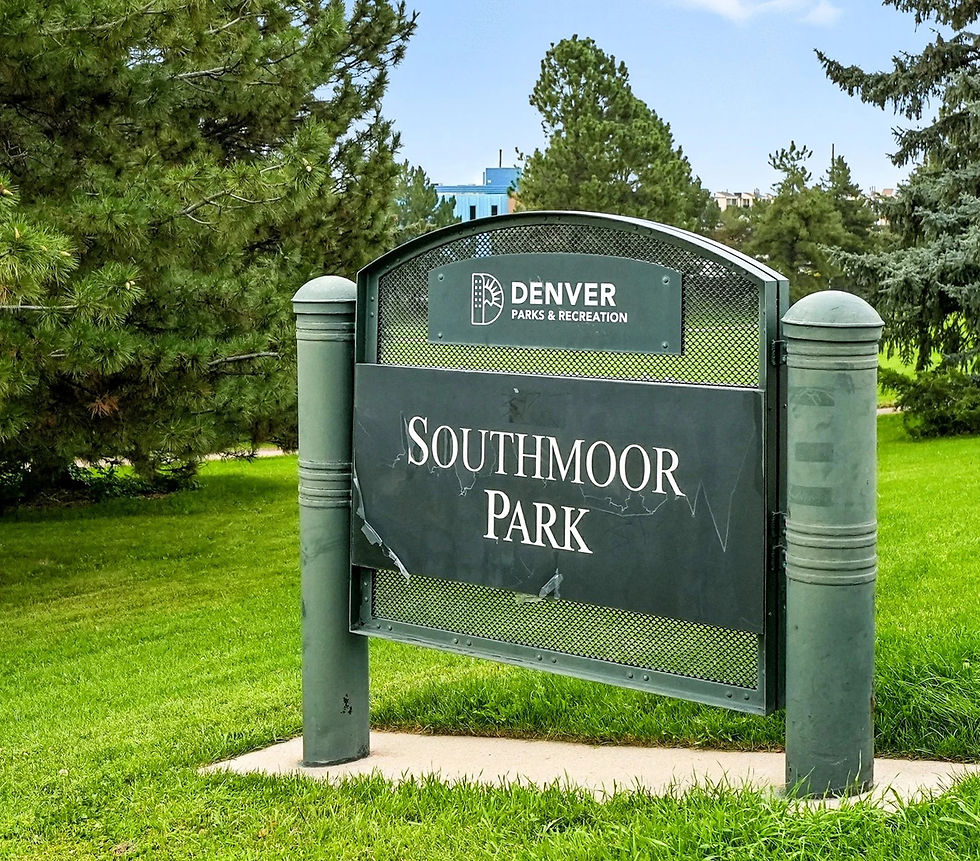
Workdays start early in the three-bedroom house in Denver’s Southmoor Park South neighborhood that McCallum shares with her husband, two kids and two mutts, Os and Gus. She and her husband both work from home, an arrangement that also allows them to be present for the kids.
“In the morning, my kids [ages 11 and 14] come first—getting them up, fed, and out the door for their bus or carpool,” declares McCallum. After a quick coffee, she usually heads to a nearby gym “to get her sweat on” with a favorite group of fitness fanatics.
Making Home Work
By mid-morning, she’s “back at work.”
“We renovated our house while I was working for the Downtown Denver Partnership,” she explains. “Initially, we did it so my husband could have a home office. When COVID-19 hit, I also created a makeshift office at home. Now, I work about 10 feet away from him, which I love.”
Living with Intention
McCallum admits that she enjoys working remotely far more than she thought she would. But that doesn’t mean she never leaves home. She meets regularly with OMF colleagues—the nonprofit has only three full-time staff members—and representatives of government agencies and transportation companies in the greater Denver area.

“Being a remote worker makes me more strategic and more intentional about the time I spend with coworkers and my business contacts,” she observes. “I want people to know that I’m a real person, not just a two-dimensional object on a screen.”
Refueling on Leadership
When she’s not traveling or thinking about mobility, McCallum enjoys curling up with a good book. She enjoys thrillers and mysteries, but particularly leans into medically-oriented apocalyptic fiction. And, true to her “turn-by-turn” mindset, she also seeks out books on leadership.
“I think about these books as ‘leadership aid-stations,’” she explains. “Sometimes I just need a cup of ‘leadership water’ to keep me going and keep me inspired.”

She’s also intentional about family vacations.
“We love to get up to the mountains, particularly Winter Park, Colo.,” McCallum reveals. “We ski and snowboard in the winter and hike and mountain bike in the summer. My husband and I also prioritize taking our kids to different parts of the U.S. to show them how other people live."
Mobilizing a Shared Vision
When McCallum thinks about her potential impact on the global adoption of MDS and CDS, it’s less about conventional metrics such as dollars raised or new members acquired, and more about networks and systems.
“My personal measure of success,” she claims, “is ‘Am I building a really efficient system and network that makes the world better?’”
McCallum’s goal at OMF is to help cities and the private sector recognize the opportunities these new data standards present, and encourage them to engage with the community that’s shaping the standards.

“The real change happens,” she insists, “when cities and companies are leading this effort, when the principles of OMF [MDS and CDS] become a shared vision for cities, organizations and people around the world.
“What I’m hoping is that instead of there being, say, 100 people around the world who deeply understand this type of work, I want there to be thousands of people who deeply understand this work, not because my colleagues or I told them, but because I told someone, and then they told 100 or more people, and so on. That’s what I want in this world!”
# # #
If you found this story interesting, I invite you to explore other profiles I’ve written about innovative professionals making significant contributions to the modernization of US infrastructure. If you have suggestions for other people who deserve mention here, please send your ideas to brooks@personsofinfrastructure.com. Many thanks.


Comments