


Coaching Utilities to Plug Leaks

Updated: Jun 21
Former soccer standout Keaton Clay calls on AI technology to help utilities anticipate, identify and repair leaks in aging water delivery infrastructure.

Key Takeaways:
Former soccer player and entrepreneur Keaton Clay has built a career around strategic problem-solving, channeling his competitive mindset and faith-driven values into helping utilities tackle one of America's most overlooked infrastructure crises: massive water loss from aging pipes.
At Oldcastle Infrastructure, Clay uses AI-powered predictive modeling and acoustic leak-detection technology to help utilities identify and repair underground water leaks more efficiently, enabling them to recover millions of gallons of treated water that would otherwise be wasted.
Despite working at the forefront of emerging infrastructure technology, Clay measures success not only by innovation and environmental impact but also by his ability to honor his faith, support his family, and help preserve water resources for future generations.
Growing up in Fort Wayne, Ind. in the 2010s, Keaton Clay found his match, physically and psychologically, in the game of soccer. As a standout high school player—he earned a varsity letter for three years and led a club team to the President’s Cup state championship for U.S. Youth Soccer teams in 2015—and later in college, Clay reveled in strategizing on how best to address each opponent’s perceived strengths and weaknesses.
“I was always the guy researching and laying out offensive and defensive options for each match,” he recalls. “I’d tell my teammates, ‘here are the pros and cons of each approach.’”
Clay and his teammates always went in with a game plan, but invariably, as in life, they had to make real-time adjustments to counter injuries or surprise strategies by their opponents.

Uncovering a National Crisis
Today, as a water asset consultant with Oldcastle Infrastructure, CivilSenseTM, Clay is coaching municipal water utility companies on how best to address a growing—and costly—problem with their water delivery infrastructure: loss of treated water to leaks in their 50-plus-year-old networks of underground pipes.
“We’re seeing huge rates of water loss all over the country, even in areas with abundant natural supplies of water,” says Clay. “On average, 30 percent of all water that’s treated and sent out into a utility’s delivery system doesn’t make it to the end consumer. It’s lost to leaking pipes.”
Clay and his colleagues at CivilSense use AI-based modeling to determine where leaks in existing water distribution networks are most likely to occur, and AI-based leak detection technology to identify the size and location—to within one foot—of active water leaks in underground water pipes.
Embracing Faith …and Challenges
Clay calls his upbringing in Fort Wayne “fairly normal.” His dad worked in finance and served as a pastor at the local church; his mom, who had training in radio production and banking, was primarily a stay-at-home parent.
“From an early age, I was interested in solving challenges,” says Clay. “Besides playing soccer, I was interested in strategic video games.” (To this day, he loves playing daily online games such as Zip and Mini Sudoku on LinkedIn “to keep his mind sharp.”)
When it came time for college, Clay followed his heart and the bouncing soccer ball.
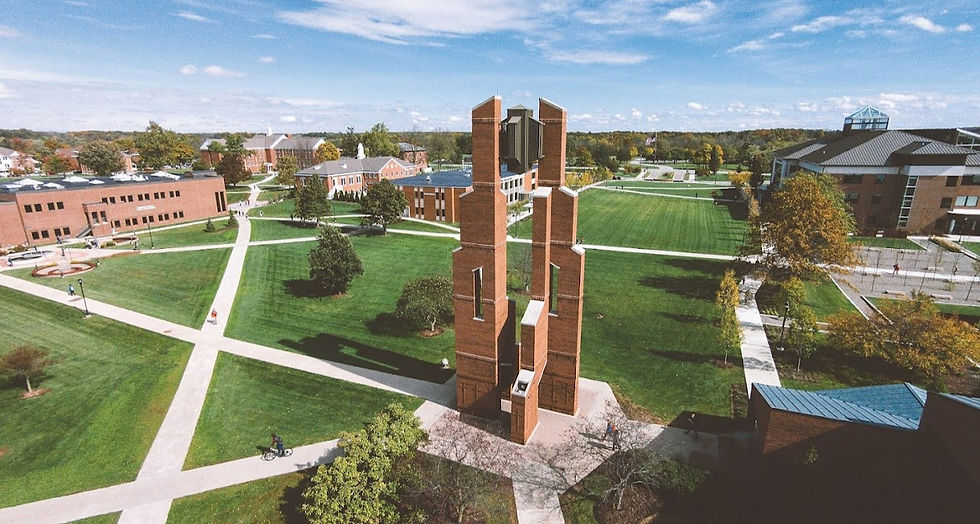
“Growing up in Indiana, we had family friends who had gone to Taylor University (a Christian liberal arts school about an hour south of Fort Wayne),” he recalls. “I received scholarship offers from other schools in Michigan, Ohio and Indiana but somehow I kept coming back to Taylor. Looking back on it, it was the Lord who guided my steps.”
Trying Out Entrepreneurship
As an undergraduate, Clay was unsure of his career path but figured he could start his own business or follow his father into financial services. Fortunately, serendipity and his problem-solving aptitude intervened.
During the summer after his freshman year, he started his own landscaping business.

“As a college kid, I figured I could help people do things such as putting down mulch, mowing their yard or doing junk removal. It seemed like an easy way to market myself and just see what happens," explains Clay.
What happened was that he had to hire four of his friends to help meet the steady demand for seeding and sodding new lawns, designing rock gardens and painting houses. Eventually, Clay handed off the business to his brother, but not before gaining valuable experience working with
clients to solve new and emerging problems.
Pivoting to Reality
As a college senior, Clay toyed with pursuing his childhood dream of becoming a U.S. Navy SEAL (special forces trained to carry out high-risk missions in sea, air and land environments). A look in the mirror, however, convinced him to consider other options.

“I was not quite what you’d call an ideal Navy SEAL candidate,” Clay admits. “Even though I played college soccer, I was a thin guy.”
At the suggestion of his soccer coach, who had connections with a member of President George W. Bush’s security detail, he decided instead to explore career options with the U.S. Secret Service. After a three-hour phone chat with his coach’s friend in early 2020, Clay was sold on the benefits of joining the federal workforce and excitedly submitted his application.
Adjusting to COVID
The COVID pandemic hit in March, 2020, however, throwing a wrench into the Secret Service’s hiring plans, and putting Clay’s hopes of joining the service on hold. It also caused Taylor University to send its students home, leaving Clay to graduate remotely with a bachelor’s degree in business management. On a more positive note, he and his girlfriend of four years exchanged wedding vows in June 2020.
Putting Family First

In the fall of 2020, the Secret Service reached out to Clay again, sent him to Ohio to do polygraph testing and made him a conditional job offer to work in Washington, D.C. After visiting the nation’s capital with his wife to see where they’d be living, however, he decided that the life of a Secret Service agent was not for him.
“Washington was not in great shape at the time,” Clay remembers, “and I knew I was going to be traveling a lot and leaving my wife at home. The long hours and the extended time away from home was not the type of life I wanted for myself or my growing family.”
Instead, Clay decided to start looking for job opportunities in Nashville, Tenn., a place he and his wife had long thought about living.
Finding Purpose in Nashville
In Nashville, Clay called on his summer landscaping experience and passion for problem-solving to secure a sales job with SiteOne Landscape Supply.

“My sales book at SiteOne was predominantly irrigation and water, which was something new for me,” he notes, “but I loved working with many different kinds of people, helping them solve problems, presenting solutions that were helpful to them so they kept coming back.”
In February 2024, Oldcastle reached out to Clay with an opportunity to work in Atlanta in a new technology sector the company was forming. The position would allow his wife to become a stay-at-home mom and the family to live closer to his wife’s parents in Atlanta. In May 2024, Clay said yes to Oldcastle, then relocated his family to northwest Georgia, where they have lived ever since.
Understanding How We Got Here

According to Clay, much of the nation’s water delivery infrastructure was built in the 1970s following the passage of the Clean Water Act (CWA) of 1972. Federal grants from the CWA funded the development of wastewater treatment infrastructure, but effectively freed up capital and debt capacity for utility companies to develop new drinking water distribution infrastructure such as water mains, pumping stations and water conveyance tunnels.
“The average life cycle of a water pipe is about 50 years,” he notes, “and since much of the pipe in the ground is now past that mark, we expect to see our water delivery infrastructure exponentially age over the next 10 to 15 years. Leaks don’t get smaller, they only get bigger.”
Predicting the Future

Pipes don’t automatically break after 50 years, of course, but through AI-based modeling by Oldcastle technology partner Voda.ai, Clay and his colleagues can predict where leaks are most likely to occur, based on the type of pipe (concrete, galvanized, plastic, cast iron), soil conditions, potential minerals in the water and other publicly available information.
“Generally, about 80% of water losses occur in 20% of a utility’s pipe network,” explains Clay, “so AI modeling helps utilities plan their pipe maintenance and replacement strategies, and make more efficient use of their human and financial resources.”
Working Smarter, Faster
Modeling, however, cannot identify leaks that haven’t happened yet. That’s why Oldcastle uses AI-based software from its technology partner Fido Tech to determine the size and exact location of active leaks.
“Historically, water leak detection has been done by engineers wearing headphones listening to water running through pipes,” notes Clay. “It’s a very time-consuming process that depends heavily on the expertise and ears of the person listening. It’s also fairly inaccurate because you’re listening to small, finite changes in the hertz (sound) level of water moving through a pipe.”

By contrast, he adds, Fido Tech’s leak detection software is trained on a library of more than 2.3 million acoustic signatures, allowing it to distinguish, for example, a five-gallon-per-minute leak in a two-inch PVC pipe from a 10-gallon-per-minute leak in a concrete or galvanized pipe.
Armed with estimates of which 20% of a network is most likely to leak, Clay’s Oldcastle colleagues deploy tiny sensors on check valves (typically located on pipes under utility maintenance hole covers) at the rate of seven to 13 sensors per mile. After processing small data samples collected by those sensors, the technicians confirm that they hear a leak where the AI software predicts the leak, mark an “X” on the ground, then move on to the next potential leak location.
Oldcastle provides the predicted leak locations—Fido Tech claims an accuracy rate of 92%—to their municipal clients, who perform the actual repairs on underground pipes.
Restoring Community Water

Oldcastle also uses AI leak-detection technology to help large technology companies, such as Meta and Google, meet internal goals to return a large percentage (e.g., 120%) of the water used by its data centers to the environment.
“Oldcastle can pair technology companies with six or eight utilities that are experiencing high water loss but don’t have the resources to identify or repair leaks in their network,” offers Clay. “If Google pays for those repairs and helps restore millions of gallons per year in treated water losses, it helps not only the company but also the communities where that drinking water has been restored.
Living a Faith-filled Life
Workdays begin early in the five-bedroom home in historic Canton, Georgia (about 40 miles north of Atlanta) that Clay shares with his wife, two sons (both under two), an Australian Shepherd named Freddie (named for Freddy Freeman, a former first baseman with the Atlanta Braves, and now the LA Dodgers) and a chocolate Labrador Retriever named Mac.
Clay works primarily from home, but not before spending time each morning reading books about how best to raise a family.

“Being a man is healthy,” he claims, “and I want to honor God by being the best father I can be. That’s why I do my reading—I keep it right next to my computer—before I ever log in.”
As a water asset consultant—he’s part of a team of about 30 employees who handle scheduling, project monitoring and data analysis—he interfaces primarily with Oldcastle customers. He’s on the road one or two weeks per month, giving customer presentations and helping them identify the most cost-effective ways to reduce the size of their treated water losses.
Honoring God and Family
But when he’s home, he’s home (except for his daily evening gym workouts and frequent rounds of golf.)

“I do my job at the highest level to honor God with the skills and abilities He’s given me,” Clay suggests. “At the end of the day, however, I do this job so I can spend more time with my family, be there for my boys and be at home to coach sports as they grow up.”
Preserving the Planet
And though he admits to being “the least patient person I know,” Clay is convinced that the work he and Oldcastle are doing will have an important and enduring effect on the planet.
“The future of infrastructure lies in the technological space,” he declares. “I’m proud to be part of a passionate and very competent team that gets to fail fast as we define how best to use technology to preserve and protect our nation’s precious water resources. The use of AI in this context is clearly still evolving but we’re very excited to part of the journey.”
# # #
If you enjoyed this article, I think you’ll also like my profile of Jennifer Betancourt Torres, general manager of the Lincoln Avenue Water Company in Los Angeles. Following the Eaton Fire in LA's Altadena neighborhood in Jan. 2025, she led led round-the-clock efforts to restore and renovate Altadena's water delivery infrastructure within a matter of weeks, helping the community rise from the ashes of one of California's most devastating wildfires.
If there are other people you’d like see profiled on this blog, please send your suggestions to brooks@personsofinfrastructure.com. Many thanks.

Great Job!